
HOW DO YOU LIKE TO EAT YOUR KING SALMON? LOOKING FOR NEW IDEAS?
I personally am always looking to try new things. Especially when cooking my catch. With the World Wide Web at your disposal the options become endless when it comes to recipes. As we draw closer to the upcoming salmon season I thought I’d quiz AI as to some fresh salmon recipes. Here is what I found.
How Chefs Serve King Salmon Today
Because King salmon is so decadent, modern high-end restaurants usually avoid heavy sauces that mask the flavor. Instead, they focus on texture and clean acid to balance the fat.
Crispy Skin-On Pan Seared: The gold standard in modern fine dining. Chefs score the skin, press it flat into a screaming hot cast-iron pan to render the fat, and serve it skin-side up so it stays as crispy as a potato chip, while the flesh remains a perfect medium-rare.
Salmon Crudo / Carpaccio: Because Sacramento Kings are so rich, they are frequently served raw or barely cured in high-end coastal California restaurants. Sliced paper-thin, drizzled with premium olive oil, sea salt, and a splash of citrus (like Meyer lemon or yuzu) to cut through the oiliness.
Cedar Plank Grilled: A nod to rustic traditions, restaurants char the fish on a water-soaked cedar plank over an open flame. The wood infuses the King salmon with a sweet, smoky aroma that pairs beautifully with its natural oils.
Slow-Poached in Olive Oil (Confit): Chefs submerge the fillet in warm olive oil spiked with herbs and cook it at a very low temperature. The result is a texture so velvety it practically melts in your mouth like butter.
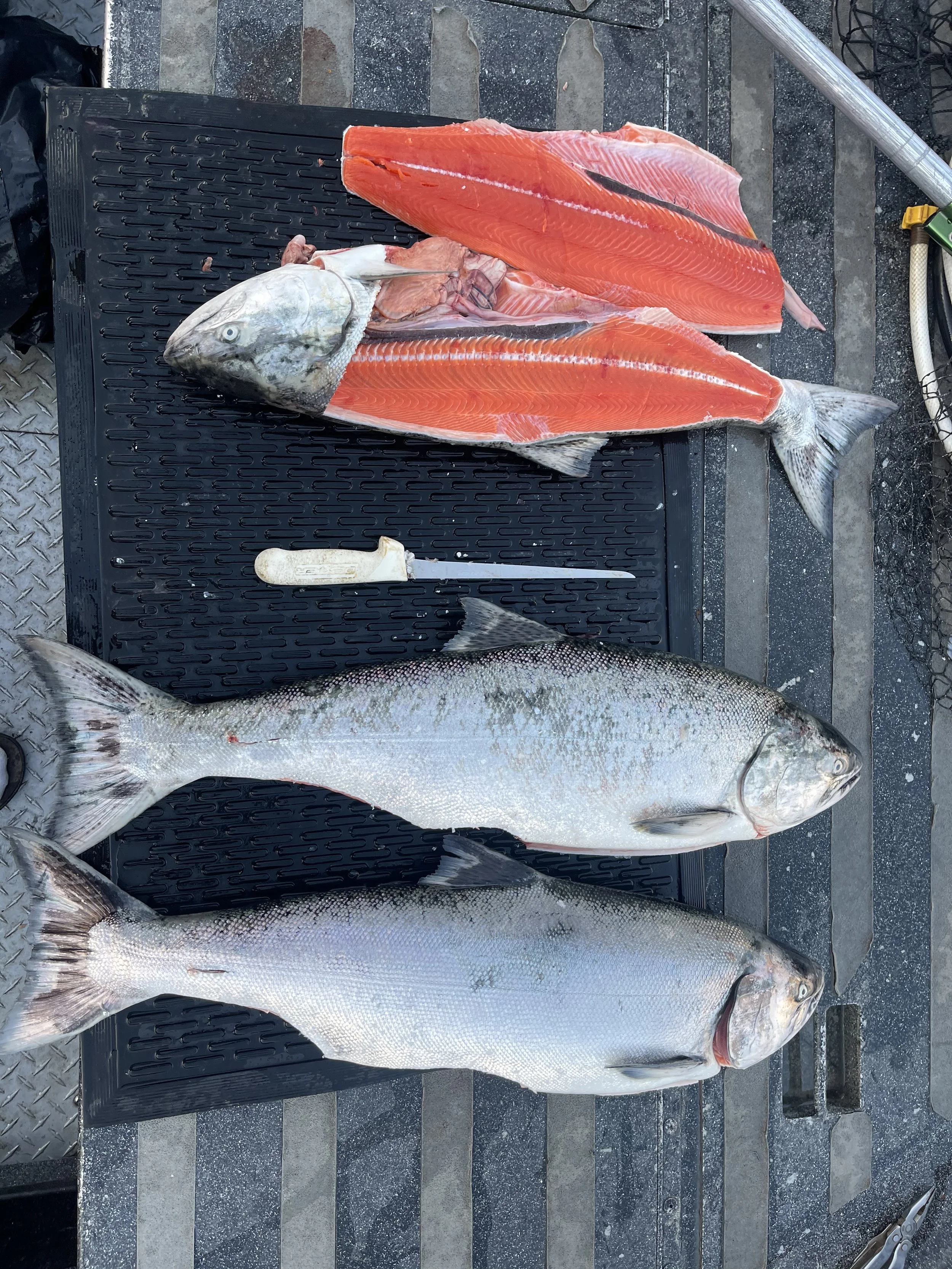
It is my personal belief and moral obligation as a sportsman to utilize all parts of your catch or kill when successfully hunting or fishing in the outdoors. Cutting back on waist because some parts of the animal or fish are considered by some cultures (including ours) to be inferior or not worthy table fair, is often times misleading. Once you come to try these “inferior” parts of you catch you will likely find they have been poorly misrepresented for whatever the reason. AI was quick to offer some different selections to consider when utilizing these less desired parts of your catch. The days of taking just the prime cuts then tossing the rest of the fish in the garbage, should be reconsidered.
Nose-to-Tail: Alternative Uses for a Whole Sacramento King
A massive Sacramento King salmon can weigh 20 to 30+ pounds. Throwing away anything but the fillets is a waste of incredible culinary potential.
Part of the FishCulinary UseWhy It’s AmazingThe Collar (Kama)Grilled or BroiledLocated just behind the gills, this is the hidden gem of the fish. It is the fattiest, most succulent piece of meat on the entire salmon. Chefs love to grill it until the skin blisters and serve it with a simple soy-citrus glaze.The BellySalmon Bacon or LoxThe belly strip contains the highest concentration of Omega-3s. You can cure and cold-smoke it to make "salmon bacon," or slice it raw for the ultimate sashimi experience.The Head & BonesSalmon Stock / FumetDo not throw the carcass away! Simmering the head (gills removed) and spine with aromatics makes a rich, milky seafood stock perfect for chowders or a traditional fisherman's stew.The SkinCrispy Salmon Skin CracklingsScraping the scales off, cutting the skin into strips, and frying or baking them yields a crispy, salty snack that can be used to top salads or rolled into sushi.
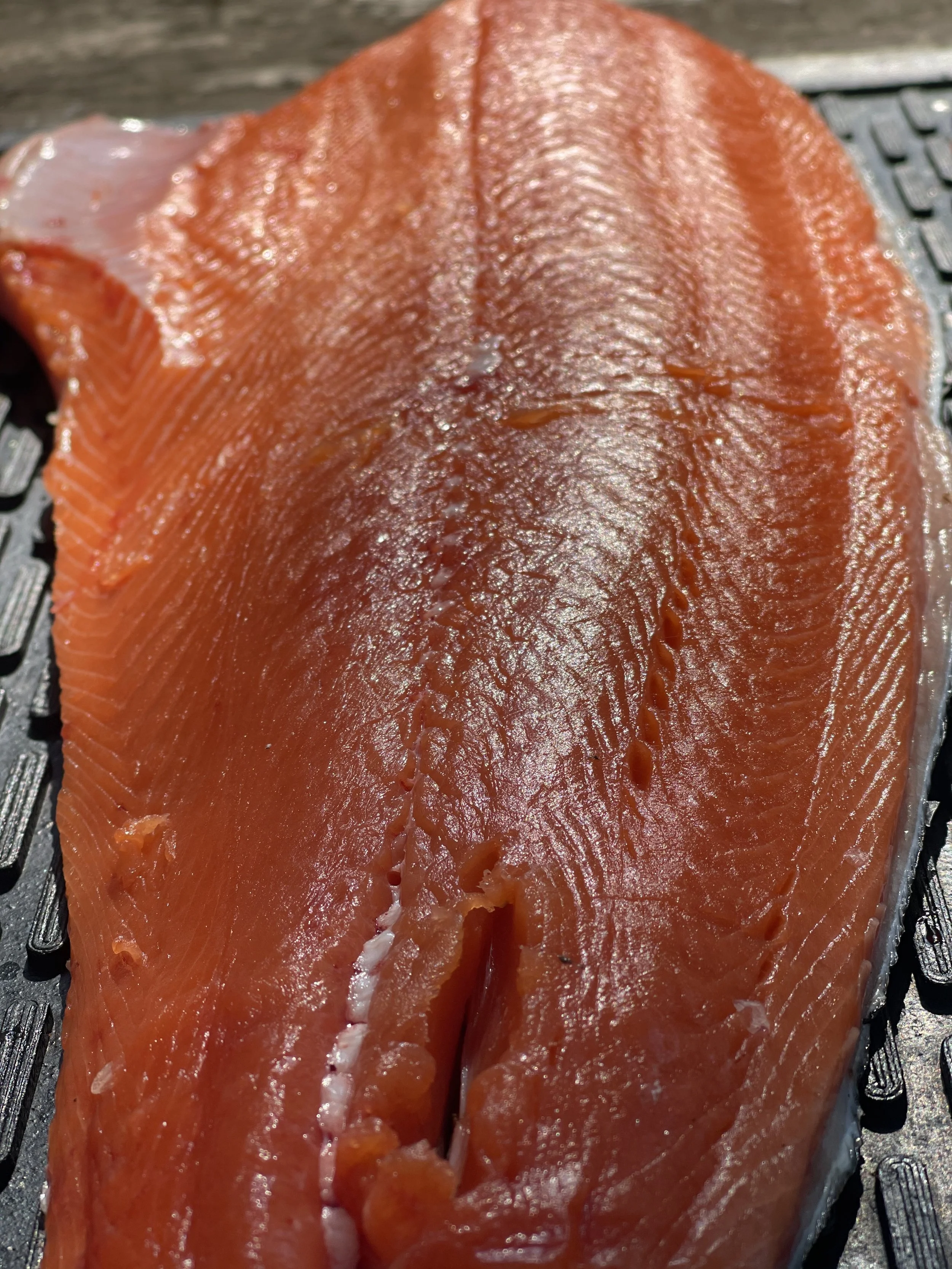
Indigenous Traditions of Northern California
To truly honor the Sacramento River King salmon, you have to look to the "Salmon People"—the indigenous tribes who have lived along the Sacramento and its tributaries since time immemorial, such as the Winnemem Wintu, the Wintu, and the Maidu.
To these tribes, the King salmon is not just a resource; it is a sacred relative whose life cycle is interwoven with their own.
The Cooking Method: Salmon on Sticks
Historically, one of the most revered ways to prepare fresh King salmon is roasting it on stakes over an open wood fire.
The Technique: Freshly caught salmon is filleted and carefully threaded onto carved, flexible skewers (often made of willow or hazelwood). These skewers are then staked vertically into the ground, angled gently over the embers of a campfire.
The Result: The fish doesn't touch a harsh metal grate. Instead, it slowly roasts in the ambient heat of the wood smoke. As the King salmon cooks, its abundant natural fats render down, self-basting the fish and keeping it incredibly juicy while absorbing a subtle, clean wood smoke flavor.